

Ceramic membranes
Construction and use.
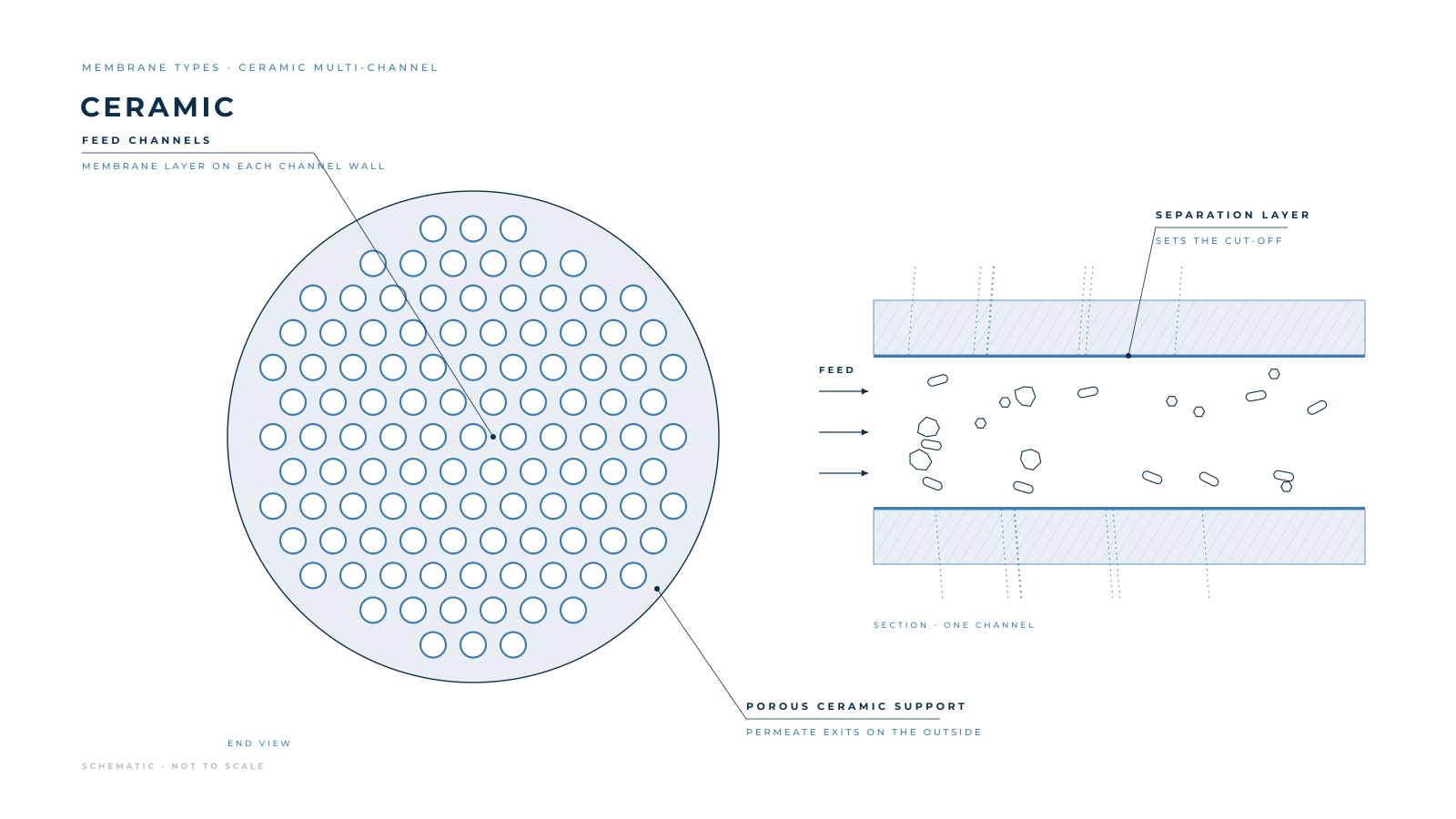
How a ceramic element is built
A ceramic membrane starts with a highly porous support of alpha-alumina (α-Al2O3), the base of every element. A liquid containing aluminium, titanium or zirconium oxide is flushed through the channels and fired in a furnace. This is repeated several times. The type of liquid, the temperature and the firing time set how open or dense the membrane layer becomes.
When to choose ceramic
Choose ceramic, which costs more per m², when the process runs hot, when the pH is extreme, or when the cleaning is too severe for polymer membranes. Most polymer spiral wound elements are limited to 45 to 50 °C in operation. The ceramic membranes we supply are stable from pH 0 to 14 and can be steam sterilised at 121 °C or higher.
Typical streams
Hydrolyzed protein, hot wash water and hot sugar streams. The manufacturer also names caustic recovery, gelatine, fish stick water, fruit juice clarification, wine filtration, rest beer, fermentation residue, emulsions, oilfield produced water and tannery wastewater.
Running ceramic microfiltration
Microfiltration is the most demanding form of membrane filtration. Its open structure makes fine applications possible, but your operators need a good understanding of the transmembrane pressure (TMP) profile. We can help train them. Breakage is rare; it can occur in extreme situations or process deviations.
High pressure or low flux?
Tell us what you run into. We like to think along with you, no strings attached.